


 By
By Prop Trading Common Sins of Traders
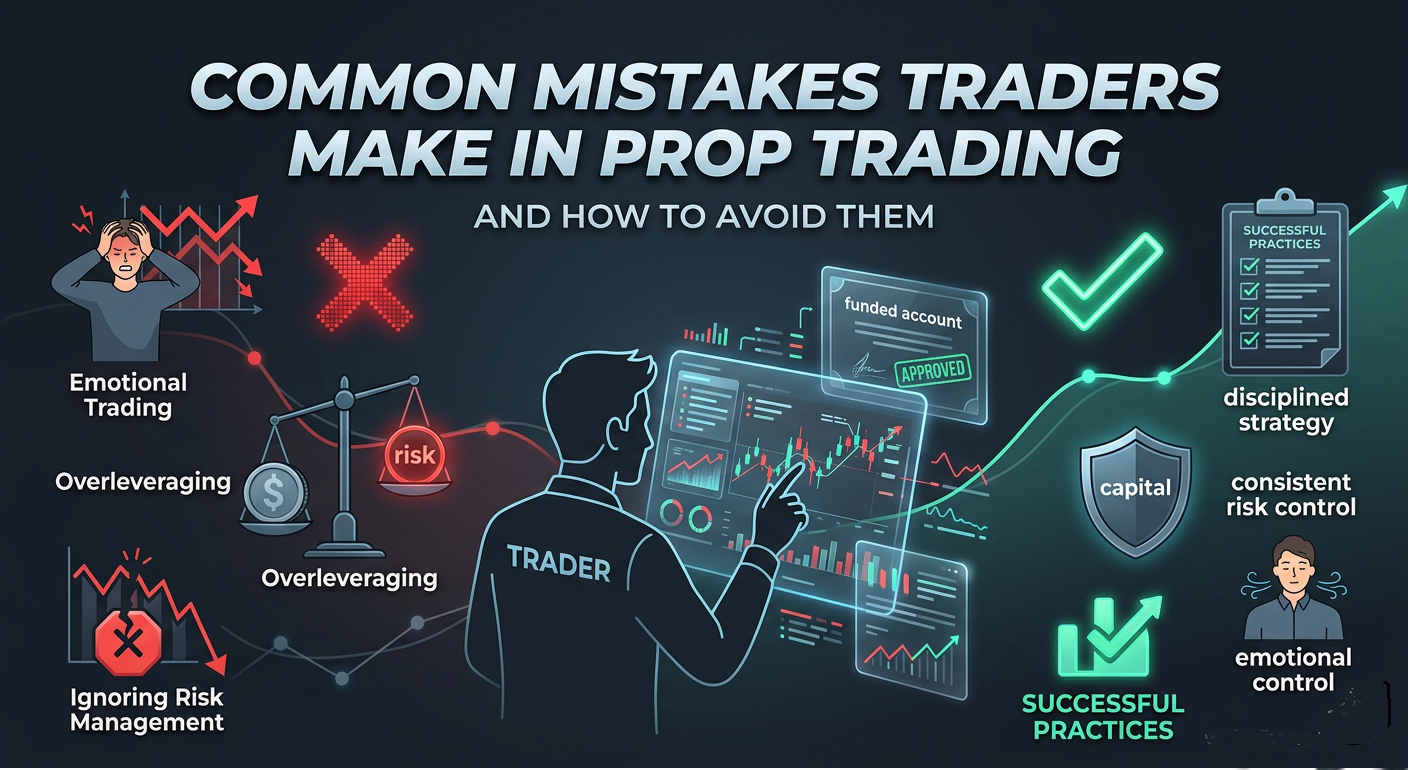
Trading may be the source of freedom and fulfillment and may equally be a source of frustration and loss at the same time. It is usually a matter of discipline and learning through the most frequent mistakes traders make. Novices as well as the experienced succumb to the same pitfalls, tend to part with spent money, time and effort.
The following are the top ten mistakes in prop trading and, most importantly, the way to prevent them.
Mistake 1: The Trading Without a Plan
Your roadmap is your trading plan. In its absence, you hand over your hand control to the market and your feelings. Experienced traders occasionally enter positions on gut feeling or the tip of the day on YouTube. That isn’t trading.
How to do it right:
Develop an elaborate plan, with entrances and exits, effective risk management, and non-trading conditions. There is nothing like trying it, polishing it, and above all, persevering with it. Never trade blindly.
Mistake 2: Negligence of the Demo Account
Most traders reject demo accounts saying it is not a real world as it does not hurt them emotionally. That is indeed so, yet this will also be their greatest asset. Demo accounts will enable you to train on how to use the strategies in a good environment without the possibility of feeling the actual real money and letting your emotions take over.
How to do it right:
• rehearse getting in and out of the house until it becomes a matter of course.
• Be serious with your demo account like a paid Challenge.
• Do not think about profits, but about consistency.
Mistake 3: Omission of the Trading Journal
You can not learn how to make mistakes without records. Memory is discriminatory and you will either forget or misrepresent information. A trading journal represents objective feedback and is a way to know what patterns are effective and what actions hurt you so often.
How to do it right:
Trade information and your impressions, doubts and feelings. And in due time there will be patterns recurring that you could never have guessed would be there otherwise. Your journal is a most truthful reflection.
Mistake 4: Falling in Love with Winning Streaks
Losses may be safer than profit. Following several successive victories, traders tend to add to the positions, violate their regulations, and believe that they have discovered the magic potion. The market soon sets them right with devastating withdrawals.
How to do it right:
• Maintain the same position at all times, regardless of the results.
• Keep in mind that 5 successful trades do not amount to anything.
– Live by your rules in profit and loss.
Mistake 5: In pursuit of the Holy Grail
All traders experience the stage of the constant change of strategies in the search of the most appropriate one. There is no such thing as the holy grail. The key to success in the hands of a disciplined trader is nearly any strategy.
How to do it right:
Select one of the strategies that fits your schedule and mind. Stick with it, polish and do not be tempted to switch to the next “secret system each time you are on a losing streak.
Mistake 6: Wearing Blinders to Trading Psychology
You will not become successful just because of technical skills. You are affected by fear, greed, ego and revenge more than most of the traders accept. People who think that they are capable of coping with emotions without planning on how to do so only become aware of their mistake when they have suffered heavily.
How to do it right:
• Learn to be aware of your feelings and recognize them.
Act not according to your impulses, but according to your rules.
• See trading as a game of the mind.
Mistake 7: Disregarding Money Management
The strongest plan will never be able to cushion you against irresponsible risk-taking. Trading in large amounts is gambling.
How to do it right:
Establish a maximum risk per trade which should be between half and one percent of your account. This would protect you against disastrous downfalls and allow you room to study and recuperate.
Mistake 8: Trading out of Boredom
Boring traders are dangerous traders. Lacking clear indications, they seek trades that are not there, and tend to get into trades in a hasty manner, just to do something. Such addiction eats away funds.
How to do it right:
• Have definite trading hours and adhere to them.
• When no good setup can be found, trade not.
I also learned that discipline is also about knowing when to be out.
Mistake 9: Trading Without Data
Most traders are unaware of their win-rate, risk to reward ratio, and average drawdown. They think that they know what they are doing but without statistics, it is just guess work.
How to do it right:
Monitor your performance indicators. The comparison of your numbers will make you see which places will provide advantages, where you are losing capital, and what needs to be improved.
Mistake 10: Battle the Trend With No System
It is highly dangerous to go against a strong trend. Unless you are very exact, very strict, and quick you are most likely to be swept away.
How to do it right:
Always observe higher timeframes.
• Be extremely critical and restrictive of stop-losses.
• Be ready to eliminate unprofitable trades immediately.
Conclusion: Each of the mistakes in this list has been committed by thousands of traders. The distinction between the amateurs and the experts is not the occurrence of mistakes, but whether you are going to learn through them.
Drop your thoughts in the comments or reach out to us for more info!